
Do The Bees Know It’s Fall?
Oct
Daytime temperatures in the 70s with nights dipping below 50. That’s early fall in South Central Pennsylvania.
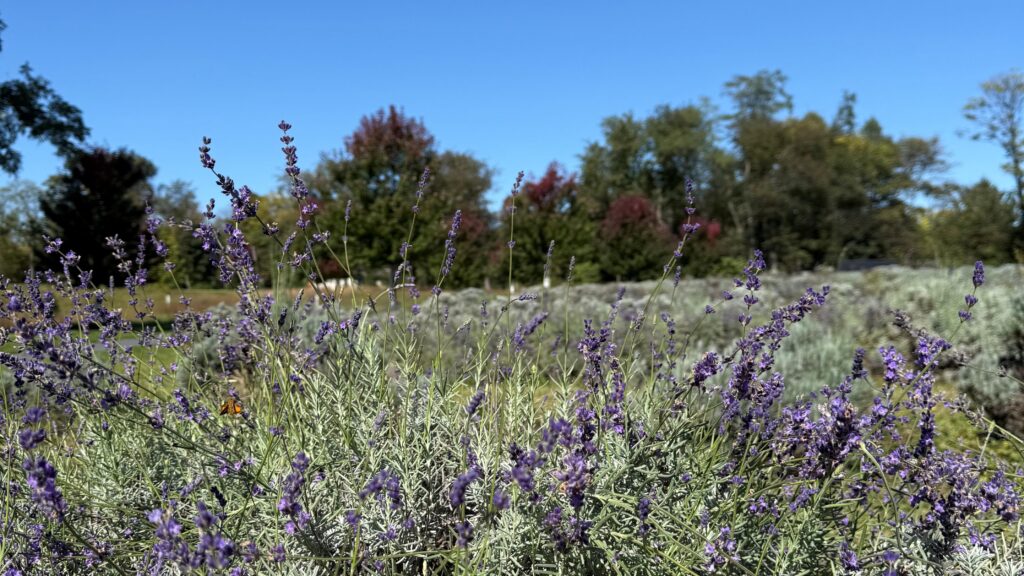
Here at Lavender Brook Farm, the maple trees are beginning to show their fall colors, while many of our lavender plants are blooming again. In fact, some of our English lavender varieties are putting on their third bloom of the season!
As tempting as it is to harvest those beautiful flowers for essential oil or our other products, we’re leaving them for the bees. It’s hard to leave good lavender unharvested, but at this point in the season, the plants need to prepare for winter instead of producing another crop.
Our rule of thumb is simple: after Labor Day, we don’t trim the plants or harvest flowers.
Lavender benefits from regular trimming to keep the plants compact and encourage new stems. Compact plants are also better prepared to handle the cold and snow of winter weather. The final trimming should be done at least six weeks before the first frost, which in our area usually means around Labor Day. That gives the plants time for the cut edges to heal and for the new growth to harden off before freezing temperatures arrive.
Ideally, we would have given all of our plants their fall trim. But once our summer work crew headed back to school, we simply couldn’t get through all 3,000 plants. Thankfully, they had already received a good haircut during summer harvest.
So for now, we’re enjoying the best of early fall: cool mornings, warm afternoons, colorful trees, and lavender blooms buzzing with bees that will be left in the field to overwinter.
And we’re happy to say that we had a very good harvest this year. We distilled a record amount of lavender essential oil and still have thousands of dried lavender bundles ready to be used in other products.
With the exception of mowing between the plants, the fieldwork for 2026 is now finished. The focus shifts from the field to the workshop, where there are plenty of products to make—including a few new ones I’m especially excited to introduce.
We’re joining several fall markets, so the next few months will be busy turning this year’s harvest into products for our returning customers and for everyone shopping at the holiday events.
Eventually, the lavender plants will change from green to gray and settle into dormancy for the winter. Then, come spring, it will be back to the field—weed, trim, propagate, harvest… and start the whole cycle all over again.
For now, though, we’ll enjoy the quiet change of seasons and leave those late lavender blooms to the bees.
